
Ninox Health
Bowel Cancer
The Warning Signs Worth Taking Seriously
Bowel cancer is the fourth most common cancer diagnosed in Australia and the second deadliest (Bowel Cancer Australia, 2026), but when it’s caught at the earliest stage, 99% of cases can be treated successfully. The problem is that early signs are easy to miss or brush off.
Signs to watch for
- Blood in your stool, or bleeding from the bottom
- A persistent change in bowel habits, including diarrhoea, constipation, or looser stools
- Unexplained weight loss
- Ongoing abdominal pain, cramping, or bloating
- Unexplained tiredness or fatigue
Any one of these on its own doesn’t necessarily mean bowel cancer, and there are plenty of other, more common explanations. But if you notice any of these signs, don’t wait it out. Speak with your GP rather than relying on a screening test to catch it.
The National Bowel Cancer Screening Program
Screening is for people who don’t have any symptoms. It’s designed to catch early warning signs before they’d otherwise be noticed.
- People aged 45 to 74 are eligible for a free at-home test kit every two years.
- If you’re 50 to 74, a kit is mailed to you automatically.
- If you’re 45 to 49, you can request your first kit online or by calling 1800 627 701, or ask your GP.
If you have symptoms or a strong family history, talk to your GP about your individual screening needs rather than waiting for your next scheduled kit.
Who’s most at risk
Risk increases with age, particularly from 45 onwards, and having a family history of bowel cancer raises it further. If bowel cancer runs in your family, it’s worth discussing your personal screening needs and timing with your GP, since you may need to start earlier or be screened more often than the general population.
Bowel cancer is also increasingly being diagnosed in younger people. The Australian Institute of Health and Welfare has reported a 134% increase in bowel cancer cases among 20 to 34 year olds over the past 18 years, so age alone isn’t a reason to dismiss symptoms.
The data below, sourced from A/Prof Daniel Buchanan’s Colorectal Oncogenomics Group via Bowel Cancer Australia, shows this rise among Australians aged 18 to 39, with bowel cancer rates climbing sharply since the early 2000s and now overtaking several other cancer types in that age group.
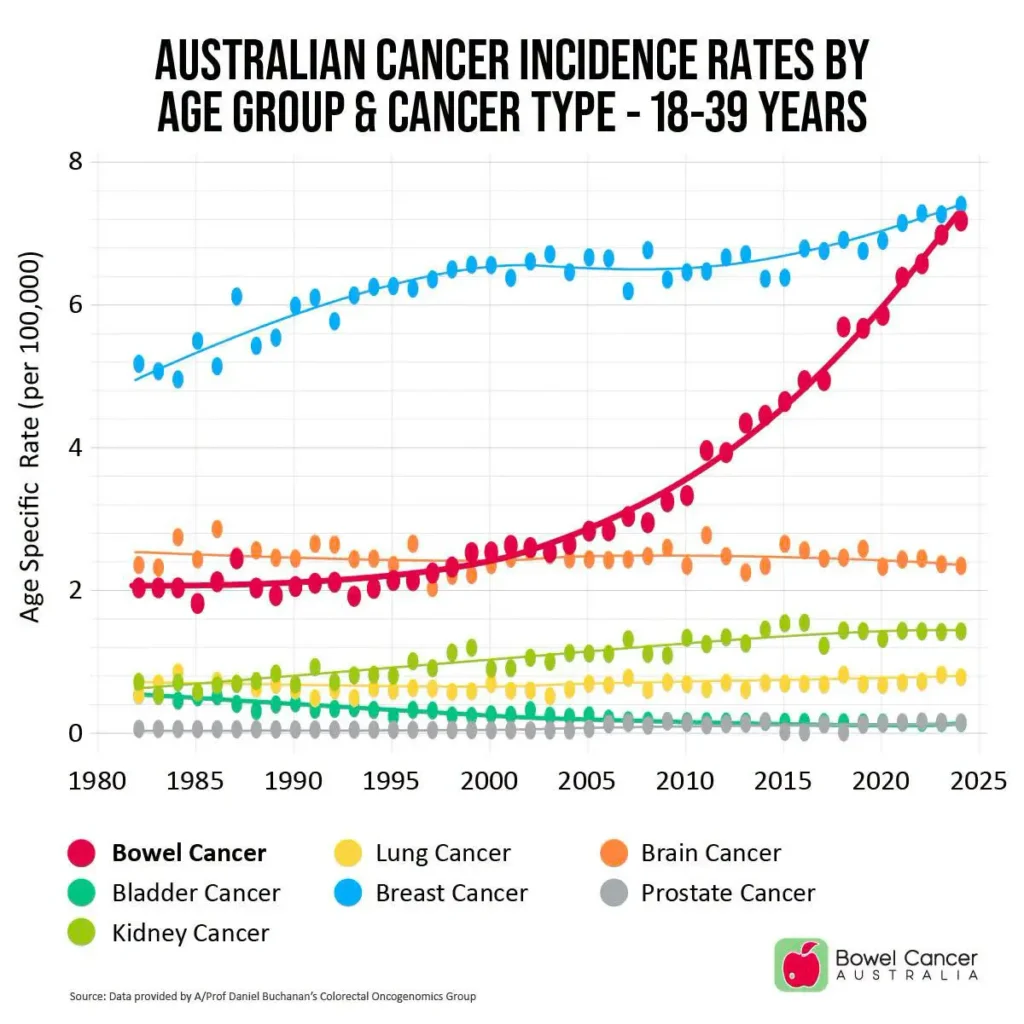
Australian cancer incidence rates by age group and cancer type, 18-39 years, showing bowel cancer rising sharply since the early 2000s
Source: Data provided by A/Prof Daniel Buchanan’s Colorectal Oncogenomics Group, via Bowel Cancer Australia.
Why early detection matters so much
Caught at the earliest stage, bowel cancer has a 99% successful treatment rate (Bowel Cancer Australia, 2026). The earlier it’s picked up, the more treatment options are generally available, and the better the outcomes tend to be.
What to do next
If you’ve noticed any of the signs above, talk to your GP rather than waiting. And if you’re eligible for the National Bowel Cancer Screening Program, or have a family history worth discussing, book a time to check where you stand.
Book an appointment: 07 5453 4404